① 99.9% 실재고 관리매일 밤 자동 갱신, 유령 재고 NO! 보이는 수량이 진짜입니다.
② 22년 전문가 직답국내 최고 전문가가 막힘없이 즉시 해결해 드립니다.
③ 확실한 기술 지원국내 최고 수준의 노하우로 막힘없는 솔루션을 제공합니다.
④ 출고 전 전수 촬영출고 전 제품 사진 기록으로 오배송 및 누락을 원천 차단합니다.
⑤ 실시간 배송 일정주문 확인 즉시 발송 예정일을 카톡으로 먼저 알려드립니다.
⑥ Since 2004 신뢰22년을 한결같이 지켜온 믿음. 걱정 없이 이용하세요.
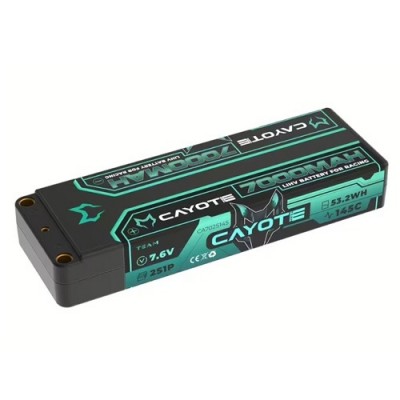
배터리 상세 제원 [CAYOTE] 7.6V 2S 7000mAH 145C Shorty Racing LiPo Battery 쇼티 레이싱 리튬 폴리머 배터리
전압
2셀 (7.6V)
반드시 사용할 장치에 맞는 전압을 사용해야 합니다.
전압이 높을수록 힘과 효율이 좋아지지만, 사용할 장치가 지원하는 전압과 맞지 않으면 기기가 손상될 수 있습니다.
※셀당 전압이 높은(3.8V) 하이볼트(LiHV) 배터리 입니다. LiHV 를 지원하는 충전기가 필요합니다.
용량
7,000mAh
용량이 클 수록 장시간 사용이 가능하지만, 부피와 무게도 용량에 비례하여 커집니다.
표준 방전률
145C
지속적으로 사용 가능한 배터리의 출력입니다. 이 배터리의 방전률이 145C 이므로, 지속적으로 출력 가능한 전류는 배터리의 용량(7A) x 방전률(145C) = 1015A 입니다.
방전률이 높을수록 강한 힘을 낼 수 있으므로, 전류 소모가 큰 모터를 사용한다면 방전률이 높은 배터리를 사용해야 합니다.
※ 위의 출력 전류 1015A 는 배터리셀 자체의 사양이며, 사용된 전선과 커넥터에 따라 그 이하로 제한될 수 있습니다.
최대 충전률
1C
충전 가능한 전류량입니다. 이 배터리의 충전률이 1C 이므로, 충전 가능한 최대 전류는 배터리의 용량(7A) x 충전률(1C) = 7A 입니다. 충전기가 7A 이상의 충전 전류를 지원한다면 완전 충전하는데 이론상 약 60분이 소요됩니다. 배터리 상태 및 충전기 종류에 따라 충전시간은 길어질 수 있습니다.
높은 전류로 충전하면 급속 충전이 가능하다는 장점이 있지만, 배터리의 수명을 감소시키므로 배터리의 안정적인 사용을 위해 1C(7A) 이하로 충전하는 것을 권장합니다.
무게
274g
139mm
46mm
22mm
길이
139mm
폭
46mm
높이
22mm
배터리 규격(크기, 무게)은 제조사에서 제공한 데이터에 따른 것으로, 예고 없이 변경될 수 있습니다. 사이트에 기재되어 있는 규격이 실제 제품과 다를 수 있으므로 제품 규격이 중요하실 경우 반드시 주문 전 미리 연락주셔서 실 제품의 규격을 확인하시고 구입하시기 바랍니다. 배터리의 경우 소모품으로, 구입 후 교환/반품이 되지 않으므로 주의하시기 바랍니다.
CAYOTE Racing 7000mAh 2S LiPo Battery 7,6V 145C 274g
CAYOTE Racing 2S Stick Pack LiPo battery with a capacity of 7000mAh at 7.6V and 145C.
Technical data:
Capacity: 7000mAh
Weight: 274g (+- 5%)
Height of the battery: 22,0mm
C-rate: 145C
Watt hours: 53.20
Dimensions (L x W): 138.5 x 46.2mm
Connectors: 5mm sockets
Information about LiPo batteries
LiPo stands for lithium polymer and is regarded as the battery of the future, offering longer runtimes and higher performance. The high number of possible charging cycles also speaks in its favor. Depending on the manufacturer, the service life is specified as 300 to 600 charging cycles. In addition, LiPo batteries have no memory effect, which means that they largely retain their capacity over their entire service life, with only a slight loss of around 20 %. However, this service life is shortened if they are not stored at a storage voltage of 3.8V. The battery should therefore be charged to this voltage after each use.
Charging LiPo batteries
When you buy a LiPo battery, it must first be charged. It is important to ensure that the charger is compatible with the LiPo battery. This information can usually be found on the charger, on the packaging or in the manual. If you have a suitable charger, you must know the correct settings for charging the battery.
It is important to understand what the information on the battery means: A LiPo battery consists of at least one cell, which is usually 3.7 volts. The "S" value indicates the number of cells. A 2S battery therefore has 7.4 volts (or 7.6 volts for a high volt battery). The current rating in amperes shows how much current the battery can supply.
What is the C value?
The "C" value is an important factor for charging and discharging. It indicates how much current can be drawn from the battery for a short time. To do this, the ampere value is multiplied by the "C" value. In simple terms: A battery with 6000mAh and 50C can deliver up to 300 A at the output. It is said that the higher the C value, the more pressure (punch) the battery provides when riding on the track!
Safety - an important issue
LiPo batteries require special safety precautions. Many people have heard of exploding batteries. Common causes are overcharging or mechanical damage. To minimize the risk, you should always use a LiPo charger with the correct settings. It is also advisable to charge the battery in a LiPo safe bag and store it in this bag at the correct storage voltage.
How do I store LiPo batteries?
Storing LiPo batteries correctly is crucial to prolonging their service life. If they are stored for more than two weeks either empty or fully charged, this can severely affect their performance and service life. When not in use for longer periods (more than one week), use a programmable charger to bring the battery to storage voltage in storage charge mode. If no such device is available, charge the battery for about half the time that would normally be required for a full charge.